A CNG cylinder’s test needs depend on its construction, installation, operating history and the vehicle carrying it—not only on whether the engine runs smoothly. By the end, you will know how the test is performed, when your cylinder is due, which vehicle checks remain separate, and how to choose a competent facility in Pune.
Key takeaways
- Vehicle size does not determine test pressure; cylinder approval and specifications do.
- Inspect mounting, valves and records differently for cars, taxis, buses and goods vehicles.
- Check the stamped test date and certificate due date before driving to a facility.
- Reject cylinders with leaks, permanent expansion, severe corrosion or damaged identification marks.
What changes between cars, taxis, autorickshaws, vans, buses and goods vehicles?
Vehicle application changes cylinder access, mounting inspection, record-keeping and downtime planning—not the basic pressure-vessel test. CNG cylinder hydrotesting for vehicles must follow each cylinder’s design approval, material, water capacity, working pressure, test pressure and mounting position; vehicle size does not justify one generic test pressure.
| Application | What to check before testing | Post-test priority |
|---|---|---|
| Private or factory-fitted car | Confirm the approved cylinder arrangement and manufacturer configuration | Verify mounting, valve, PRD and leak tightness |
| Aftermarket car | Match cylinder, kit, mounting and vehicle application with conversion and registration records | Check installation against approved documentation |
| Taxi, autorickshaw or commercial car | Keep reliable test-date records because operating cycles accumulate quickly | Plan removal, refitting and minimum safe downtime |
| Van or school vehicle | Protect passengers, provide cylinder access and ventilate any enclosure | Recheck mounting after passenger or cargo loading |
| Bus or goods vehicle | Identify every cylinder, including larger or multiple units, positions and pipe routes | Inspect each cylinder and the complete pipe installation separately |
For cng testing applications Pune, ask for the exact service: hydrotesting, kit servicing, leak testing or retrofitment documentation. Steel, aluminium and composite cylinders require their approved inspection method and acceptance criteria.
- Separate cylinder removal and hydrotesting from full kit servicing.
- Confirm the cylinder serial number, markings and previous test date.
- Schedule drying, refitting, valve and PRD checks, pipe protection, shut-off operation and a final leak check.
- Treat ECU, injectors, regulator pressure and wiring as separate service tasks.
How the hydrostatic test is performed from removal to refitting
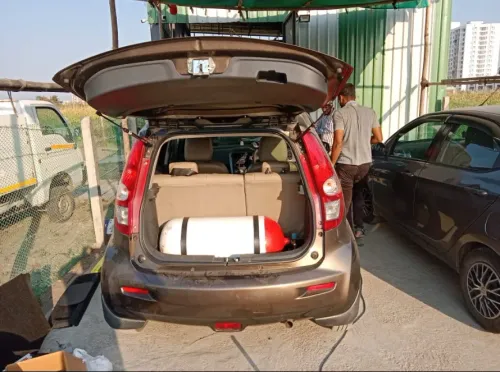
1. Verify the cylinder’s manufacturer plate or permanent markings against the records: serial number, water capacity, working pressure, test pressure, manufacture date and previous-test marking. Testing a cylinder while CNG remains inside is unsafe; isolate it, remove the gas, purge until gas-free, and remove the cylinder from the vehicle.
2. Inspect the cylinder externally and internally. Check for corrosion, pitting, dents, gouges, bulging, fire or heat exposure, damaged neck threads, illegible identification, and unauthorised drilling, welding or machining. Record every rejection condition.
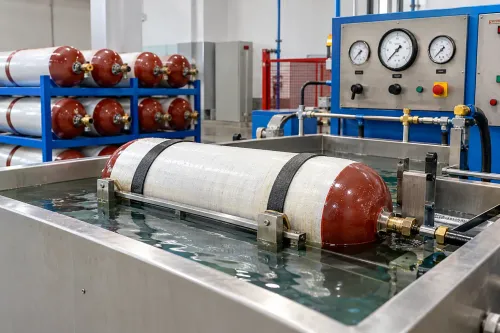
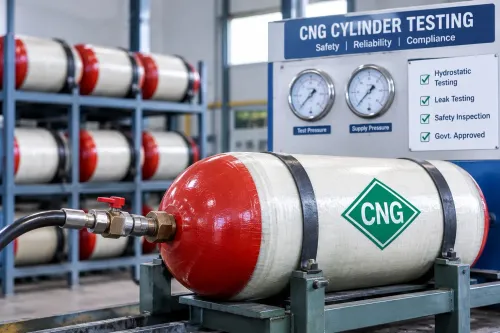
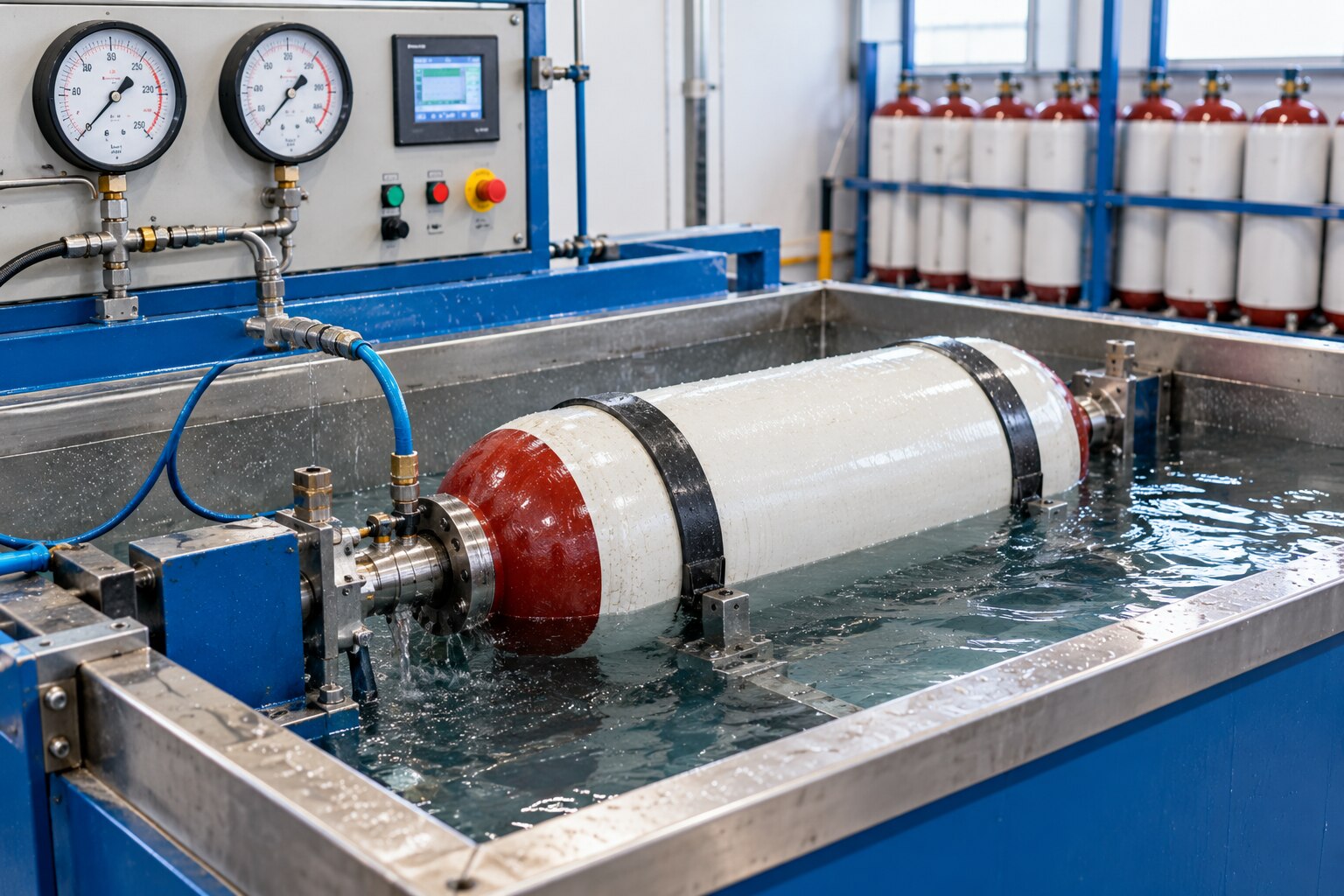
3. Fill the cylinder with water or another approved incompressible medium, then pressurise it using the method specified for that cylinder’s design approval. A water-jacket test measures total expansion and permanent volumetric expansion; a pressure-hold check alone is not equivalent.
4. Record expansion, leakage and the acceptance decision. A failed cylinder must not be repaired by welding, heating, drilling or unapproved machining.
5. Drain the cylinder completely and dry it thoroughly. Trapped water promotes internal corrosion. Inspect the valve and pressure-relief device (PRD), replacing either when the approved procedure requires it.
6. After a pass, apply the required test marking or label showing the next due date. Refit the cylinder with correct mounting, valve and PRD installation, protected pipe routing and a working shut-off. Finish with a vehicle leak check and confirmation that the installation is secure.
These steps define safe CNG hydrotesting for vehicle applications Pune, not a gas-leak check alone.
How to identify the due date and understand what the certificate proves
For road vehicles in India, schedule CNG cylinder hydrotesting for vehicles three years after commissioning and every three years thereafter, unless the cylinder approval or regulator sets a shorter interval. Do not count only from the vehicle registration date.
| Date source | What to check | Why it matters |
|---|---|---|
| Manufacture and commissioning records | Cylinder plate, installation papers and vehicle records | Establishes the correct starting point |
| Previous certificate and laboratory report | Test date, result and cylinder serial number | Confirms the last examination |
| Cylinder marking or label | Stamped last-test date and next due date | Shows the current service status |
If these dates conflict, ask the test facility to reconcile the records before booking. A pass certificate must identify the cylinder by serial number and other markings, state the result, record expansion or leakage findings where applicable, show the next due date and include the required marking or label.
A failure report must name the rejection reason, such as severe corrosion, permanent deformation, damaged threads, illegible identification, fire damage or another condition outside the acceptance criteria.
The certificate proves the pressure vessel passed its specified examination. It does not prove that the complete CNG kit is safe or correctly tuned. Request separate checks for:
- Vehicle and high-pressure line leaks
- Line pressure and regulator operation
- Injector operation and ECU scanning
- Shut-off faults, wiring and complete kit servicing
A cylinder that passes hydrotesting can still become unsafe after incorrect refitting.
When a cylinder must be rejected, replaced or kept off the road
A cylinder stops being serviceable when it is overdue, leaks, fails the approved expansion limit, or shows damage that pressure testing cannot reverse. Do not treat a certificate as permission to keep a defective cylinder in use.
1. Reject or isolate it for professional assessment if you find severe corrosion, bulging, a deep dent, gouging, fire or heat exposure, damaged neck threads, missing or unreadable identification, or unauthorised drilling, welding or machining.
2. Never repair a pressure cylinder by welding, heating, drilling or unapproved machining. A failed cylinder can release high-pressure gas, while a damaged mounting or valve can become a crash hazard and create regulatory problems.
3. Choose replacement instead of retesting when the cylinder has permanent deformation, serious material loss, heat damage, compromised threads, or a condition the approved procedure cannot restore. A test certificate does not legalise an unapproved CNG kit, incorrect cylinder mounting, or a conversion absent from the vehicle’s transport-authority record.
4. If the cylinder is overdue but intact, ask the facility whether controlled transport or removal is required before driving. If it is leaking, visibly deformed or fire-exposed, arrange professional isolation and transport instead of driving to a workshop.
Taxis, autorickshaws, school vehicles, fleets and goods vehicles should retain rejection reports and plan a compliant replacement or engineering decision. Searching “cng hydrotesting near me” is not a reason to seek a paper-only pass.
How to choose a Pune facility and prepare the vehicle
Choose by scope, not distance: a “cng hydrotesting near me” result may be a garage that checks external leakage, not a facility conducting statutory hydrostatic examination. For cng hydrotesting for vehicle applications Pune or cng testing applications Pune, separate the service you need before booking.
| Facility type | What it handles | What to verify |
|---|---|---|
| General CNG garage | Leak checks, tuning or repairs | It is not automatically authorised for cylinder hydrotesting |
| Installation workshop | Kit fitment and retrofit documentation | Approved kit and vehicle/application records |
| Cylinder-testing facility | Pressure-vessel examination | Automotive CNG scope, cylinder material and design method |
| Government-authorized laboratory | Statutory cylinder testing and records | Authorisation under the Gas Cylinders Rules and traceable reporting |
Ask these questions before travelling from Pimpri-Chinchwad or elsewhere in Pune:
- Does the scope cover this steel, aluminium or composite cylinder, its design approval and its specified test method?
- Are pressure gauges and expansion equipment calibrated with measurement traceability? ISO/IEC 17025 supports laboratory competence but does not replace statutory authorisation.
- Will you receive a traceable report, certificate or rejection document, updated due-date marking, and separate post-refit leak and kit checks?
- Who removes, transports, certifies and reinstalls the cylinder on this factory-fitted or aftermarket system?
Bring the registration record, previous certificate, kit installation papers and cylinder serial details. Use the fuel safely before arrival, arrange access if the cylinder is enclosed, and allow time for removal, water testing, drying, refitting, leak checks and a retest.
Balaji Hydrotesting Lab is worth comparing when its current authorisation, scope and handling records match your vehicle.
Related product
 | CNG Hydrotesting Balaji Hydrotesting Lab in Pimpri Chinchwad offers precise CNG cylinder hydrotesting services to ensure safety and integrity. View product → |
Frequently asked questions
Does hydrotesting differ between cars, taxis, vans, buses and goods vehicles?
The pressure-vessel test follows the cylinder’s approval and specifications. Vehicle type changes access, mounting inspection, documentation and downtime planning.
What happens during CNG cylinder hydrotesting?
The cylinder is removed, identified, visually inspected, filled with water, pressurised to its specified test pressure, checked for leakage and permanent expansion, then approved or rejected before refitting.
How do I find the CNG cylinder hydrotesting due date?
Read the cylinder’s stamped manufacturing and test information, then compare it with the due date recorded on the test certificate and vehicle records.
What does a CNG hydrotesting certificate prove?
It records the tested cylinder’s identity, test result and validity under the facility’s authorised procedure. It does not prove that every vehicle component is safe.
When must a CNG cylinder be rejected or kept off the road?
Keep the vehicle off the road when the cylinder leaks, shows dangerous corrosion or damage, has unacceptable permanent expansion, or cannot be positively identified.
Keywords