“Gaskit” can mean a replacement gasket or a complete CNG conversion kit, and confusing the two can lead to the wrong parts, missing approvals, or a gas leak. You will be able to match the kit to your vehicle, verify the cylinder and approval records, inspect gasket selection, and judge an installation before accepting the car.
Key takeaways
- Treat a gaskit as one joint seal, not a complete CNG conversion kit.
- Ask for approval documents matching your car, kit model, and cylinder.
- Confirm each connection has the correct gasket and no visible leaks.
- Collect invoices, test records, approval details, and installation paperwork.
Is the “gaskit” a replacement seal or a complete CNG kit?
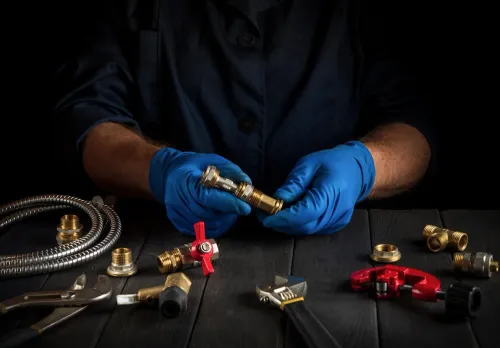
A “gaskit” is a replacement gasket: a sealing ring or shaped seal made for one specific joint. It is not a complete CNG kit. A complete kit includes the cylinder, valve, pressure regulator, injector rail, nozzles, ECU, high-pressure tubing, shut-off devices and mounting hardware.
Before accepting a recommendation, match the proposed kit against your vehicle:
- Engine displacement
- Petrol or bi-fuel fuel type
- Engine-management system
- Vehicle make and model year
- Applicable emission level
- Cylinder water capacity
- Injector type
- Regulator capacity
- Nozzle arrangement
- ECU compatibility
A generic kit recommendation is not enough. Ask for the exact kit manufacturer and model, then confirm that it is approved for your vehicle variant and engine. For “new gaskit installation center cng kit for specifications” or “cng gaskit specifications,” judge the component list and vehicle match, not the spelling or advertising label.
Do not confuse cylinder pressure with engine pressure. A cylinder’s nominal working pressure is commonly about 200 bar at its reference temperature; the regulator reduces this to a much lower pressure before gas reaches the engine. Ordinary petrol hoses, clamps and plumbing parts are not substitutes for approved CNG-rated components.
How do you prove that the proposed kit and cylinder are approved for your car?
Approval is a chain of records, not a generic kit name or a cylinder that happens to fit. Ask for these items before installation:
- Kit identity: manufacturer, exact model, component serial numbers, and the vehicle or kit type-approval reference from a recognized automotive testing agency such as ARAI or ICAT.
- Vehicle match: documentation covering your exact make, model year, variant, engine displacement and characteristics, petrol or bi-fuel configuration, engine-management system, emission requirements, injector type, regulator capacity, nozzle arrangement, cylinder water capacity and ECU compatibility. These cng kit specifications must match the approved installation.
- Installer authority: proof that the center is authorized to install that approved kit. Vehicle or kit type approval, authorization to install, cylinder approval and registration-record endorsement are separate matters.
- Cylinder identity: inspect the body and valve for manufacturer markings, serial number, working-pressure rating, identification marks, service-life information, test date and requalification date. The cylinder must match the approved installation; physical fit is not approval.
- Handover records: request the installation invoice, warranty terms, conversion certificate, cylinder test certificate showing its serial number and next due date, installation and leak-test report, and the plan for recording the fuel-type alteration with the registering authority.
Automotive CNG cylinders are commonly requalified every three years under applicable Indian cylinder-safety rules. Count from the cylinder’s test date, not the conversion date. An invoice alone is not an updated registration certificate.
Which gasket belongs at each CNG connection?
A gasket is not selected by colour, shape or a quick visual match. Identify the connection first: cylinder valve, regulator, injector rail, nozzle, filling connection, shut-off valve or another fitting.
| Joint design | What to match | What goes wrong |
|---|---|---|
| Face seal | Gasket dimensions, cross-section, material, pressure and temperature ratings, connector type and manufacturer part number | Sealant prevents seating and creates a leak path |
| O-ring | O-ring size, cross-section, material, pressure and temperature ratings, groove and connector specification | An oversized or incompatible ring extrudes or swells |
| Flare connection | Correct flare angle, tubing size, connector type and manufacturer part number | A gasket or tape changes the flare’s seating surface |
| Compression fitting | Tube diameter, ferrule, nut, material and approved fitting specification | The wrong ferrule fails when the system is pressurised |
A flattened, cut, hardened, swollen or incorrectly sized gasket can leak under CNG pressure. Reusing it is unsafe; tightening the fitting further does not restore its sealing surface. Do not add thread tape or liquid sealant to a face seal, flare or compression joint. Material can obstruct the gas passage or create a leak.
CNG-rated components must replace ordinary petrol-fuel hoses, clamps and generic plumbing parts. Remember that a cylinder’s nominal working pressure is about 200 bar at its reference temperature; regulator outlet pressure is much lower.
Ask, “What is the gasket’s manufacturer part number and component specification?” Do not ask only for “a new gaskit.” Those details are the cng gaskit specifications.
What should you observe during installation and before accepting the vehicle?
1. Begin with a vehicle inspection. Confirm the make, model, engine, fuel system, emission level and existing engine faults before any parts are fitted.
2. Ask the technician to show the approved kit and component set. Match the kit model, cylinder, valve, regulator, injector rail, ECU, tubing and mounting hardware to the vehicle approval.
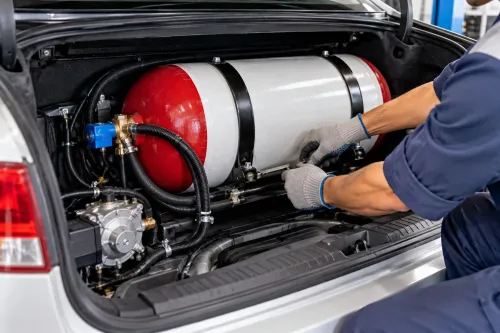
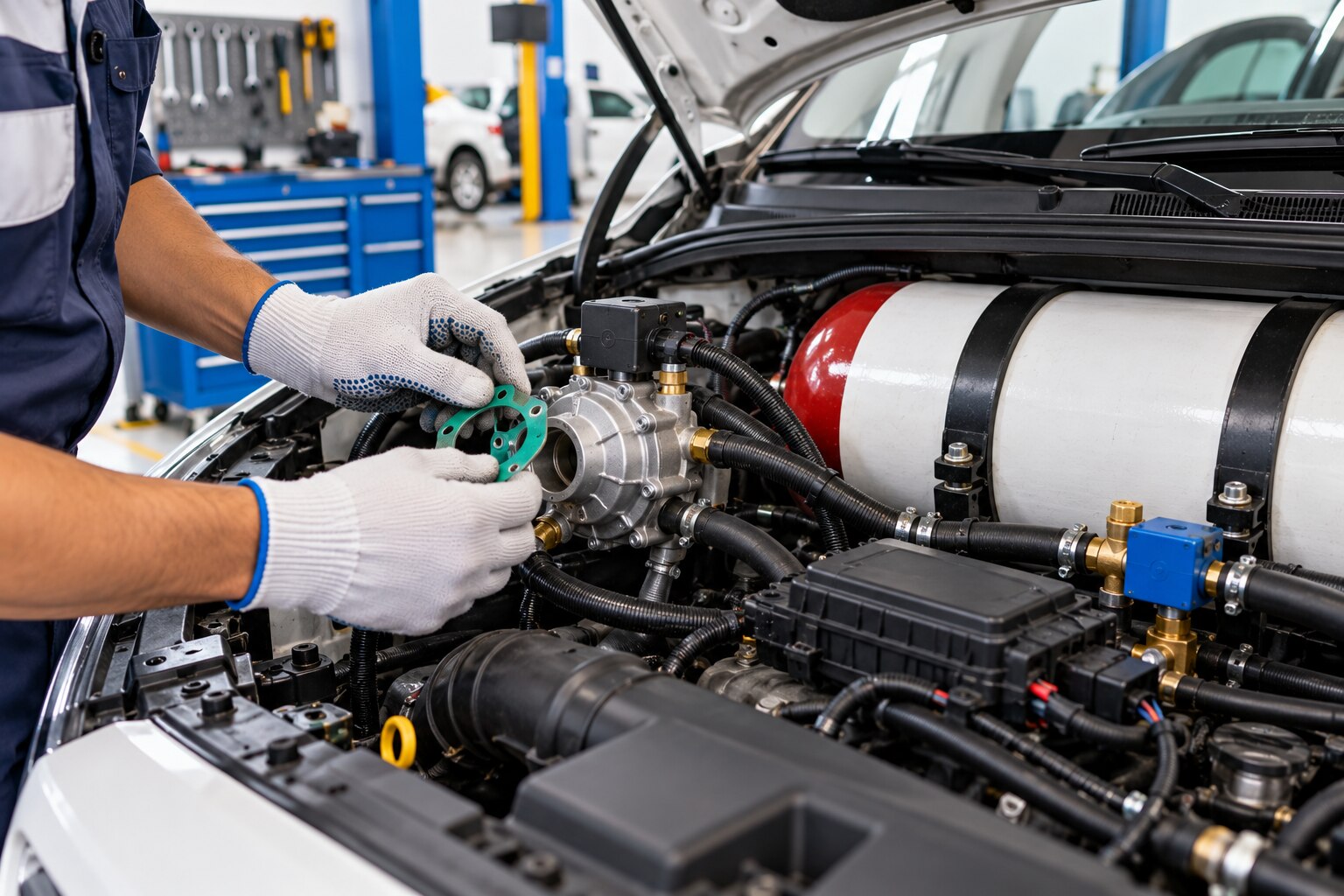
3. Check the cylinder mounting. The cylinder must be restrained by specified brackets, protected from impact and abrasion, clear of the exhaust, belt, fan and suspension, and free from unauthorised welding or drilling of the pressure vessel.
4. Watch the high-pressure line routing and electrical connections. Tubing and wiring must not rub against sharp edges or touch hot or moving parts; the technician should then inspect the valve, regulator, joints, shut-off devices, venting and refuelling connection.
5. Require leak testing before calibration. A soap-bubble test or electronic detector helps locate leaks, but neither replaces the required inspection records, component approval or cylinder certificate.
6. The technician should calibrate the ECU, check stable petrol-to-CNG changeover, test idle operation and complete a road test. Ask for the installation report and leak-test report before accepting the vehicle.
7. During the first drives, watch for gas odour, hissing, warning lights, unstable idling, difficult starting, poor changeover, abnormal fuel-trim or emission faults, and tubing or wiring contact with the exhaust, belt, fan or suspension.
Stop using the CNG system and request inspection if you smell gas or hear hissing.
Which records should you demand from a Pune or Pimpri-Chinchwad installation center?
A center that cannot produce four traceable records has not proved a safe conversion, whatever it calls the service. For searches such as “new gaskit fitting Pune” and “cng kit gasket installation in Pimpri Chinchwad,” use this decision test:
| Record | What it must identify | Reject if missing |
|---|---|---|
| Kit-and-vehicle approval reference | Kit manufacturer, model, exact vehicle variant, engine and approval reference | Only a generic kit name |
| Installer’s authorization | Authorization to install that approved kit | Verbal approval claim |
| Cylinder test certificate | Cylinder serial number, markings, test date and next due date | Certificate does not match the cylinder |
| Installation and leak-test report | Fitted components, leak inspection, calibration and handover findings | Hydrotest certificate offered alone |
Also demand the invoice, warranty terms, conversion certificate and evidence of the required registering-authority process. An invoice is not an updated registration certificate.
Compare every serial number and model designation on the paperwork with the parts physically installed. Reject a center offering only a generic kit name, a hydrotest certificate or a verbal approval claim.
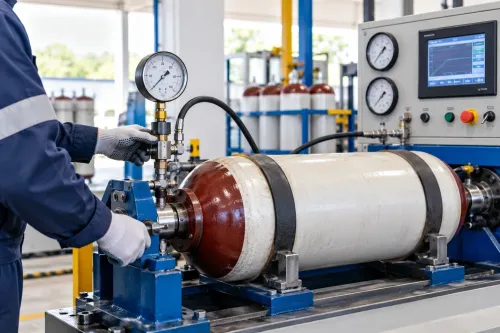
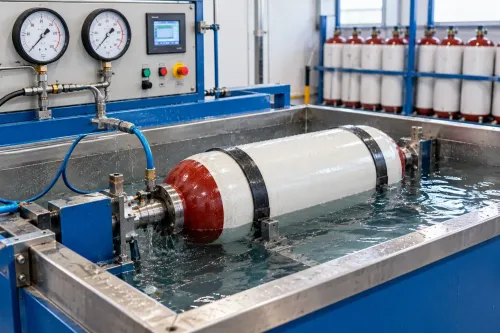
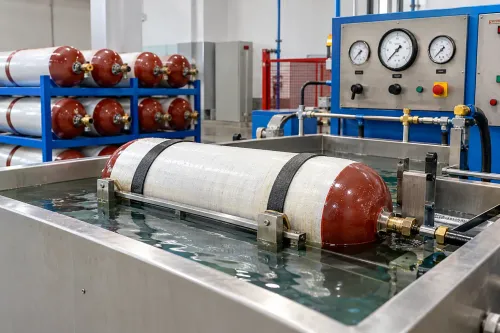
Cylinder hydrotesting checks the pressure vessel; it does not certify brackets, high-pressure lines, joints, regulator, shut-off devices, venting or overall leak-tightness after refitting.
For a local customer, Balaji Hydrotesting Lab can be considered when installation, gasket-related inspection, servicing and cylinder documentation remain traceable records rather than one marketing label. The deciding question is whether the center connects the vehicle, kit, cylinder and paperwork without gaps.
Related product
 | CNG Kit Installation Balaji Hydrotesting Lab in Pimpri Chinchwad also provides seamless and expert CNG kit installations, transforming vehicles for eco-friendly and... View product → |
Frequently asked questions
Is a “gaskit” a replacement seal or a complete CNG kit?
A gaskit is a replacement gasket: a sealing ring or shaped seal made for one specific joint. A complete CNG kit includes the cylinder, valve, regulator, injector rail, nozzles, ECU, high-pressure tubing, shut-off devices, and mounting hardware.
How do you prove that the proposed kit and cylinder are approved for your car?
Ask the installation center to show the kit’s vehicle-application or retrofitment approval and confirm that the make, model, fuel system, and engine variant match your vehicle. Check the cylinder’s manufacturer marking, serial number, manufacturing date, test status, and approval details against the documents.
Which gasket belongs at each CNG connection?
Use the gasket specified for that joint and component by the kit manufacturer. Do not substitute a generic rubber ring, reuse a compressed seal, or fit a gasket that does not match the connector size, material, pressure rating, and connection design.
What should you observe during installation and before accepting the vehicle?
Check that the cylinder is securely mounted, tubing is protected from heat and abrasion, shut-off devices are accessible, connections are correctly tightened, and the system passes a leak test. Request a demonstration of safe operation before driving away.
Which records should you demand from a Pune or Pimpri-Chinchwad installation center?
Collect the itemised invoice, kit and cylinder identification details, approval documents, cylinder test or inspection record, installation certificate, leak-test result, warranty terms, and any paperwork required for vehicle registration or updating the vehicle record.
Keywords