Gas smell, hissing, stalling, backfire, poor fuel economy, and difficult filling can indicate an unsafe or incorrectly installed CNG system rather than a simple tuning issue. You will learn how to respond safely, identify the likely fault, decide when full refitting is necessary, and compare correction centers by the evidence and checks they provide.
Key takeaways
- Stop driving immediately if you smell gas or hear hissing.
- Ask the center to inspect hoses, joints, brackets, valves, and leak points.
- Choose refitting when mounting, routing, or component compatibility is unsafe.
- Demand the correction record, test result, invoice, and updated vehicle documents.
Recognise an Installation Defect Before You Keep Driving
A gas odour or hissing sound means stop driving. Switch off the engine, avoid cigarettes, flames, electrical switches and every other ignition source, move passengers away from the vehicle, and arrange an inspection instead of restarting it or driving to a workshop.
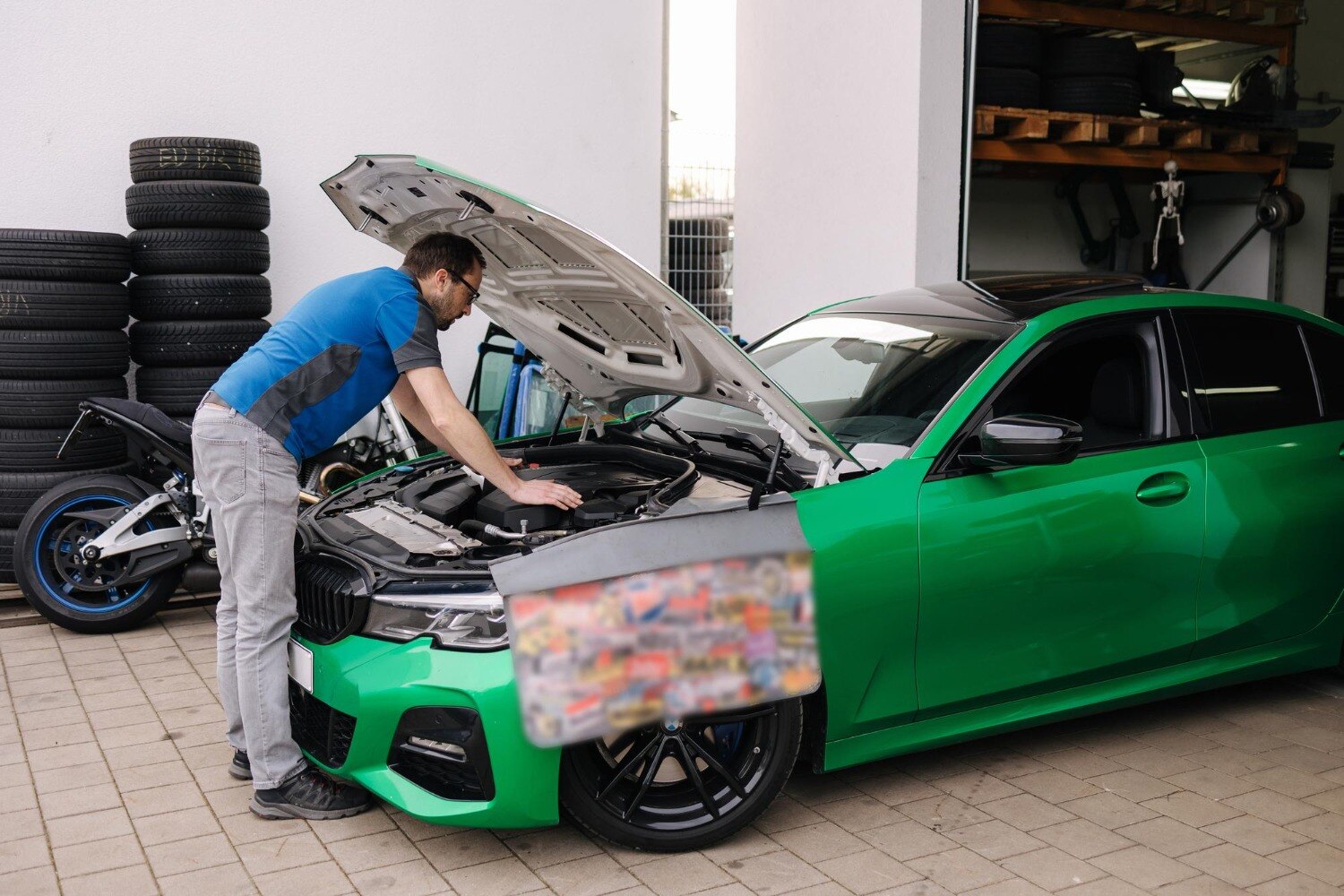
1. Treat these symptoms as installation warnings: a dashboard warning light, poor petrol-to-CNG switching, stalling, backfire, unstable idle, reduced mileage or difficult filling. Regulator icing, loose cylinder or regulator brackets, damaged hoses, incorrect pipe routing and inadequate cylinder clearance also require immediate attention.
2. Do not assume the system is safe because the vehicle starts normally. A hidden leak, loose high-pressure joint or unsafe cylinder mounting can exist without a fault code or obvious loss of power.
Ask for a complete fuel-path leak check covering the cylinder valve, filling connection, high-pressure lines, joints, regulator, injector rail, shut-off devices, hoses and fittings—not only an ECU scan.
3. If you search cng fitment center in pune installation correction, look for rectification of an existing installation, not merely a new-kit fitting appointment. The technician should identify whether the defect is in the high-pressure or low-pressure system, mounting, wiring or calibration before replacing parts; recalibration follows mechanical repairs.
A road test on petrol and CNG helps separate installation faults from ignition, battery or engine problems.
What a Proper Fault Inspection Should Check
A proper inspection starts with identification, not parts replacement. Record the kit make, gas ECU, vehicle model and fuel system, then confirm that the kit is type-approved for that vehicle and that the installer is authorized for the application.
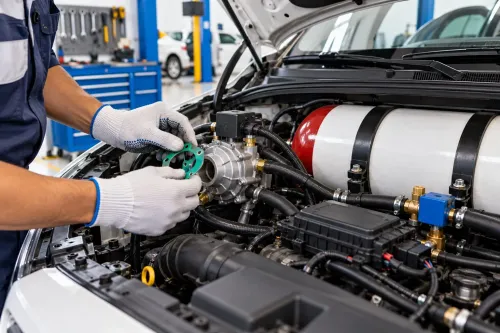
- Inspect injector-rail and reducer connections. Check the cylinder valve, filling connection, high-pressure tubing, joints, shut-off valves and fittings for damage, incorrect routing or unsuitable components.
- Examine low-pressure hoses, filters and regulator condition. Test wiring, grounds, fuses and petrol-to-CNG changeover controls; a loose ground or failing battery can imitate ECU trouble.
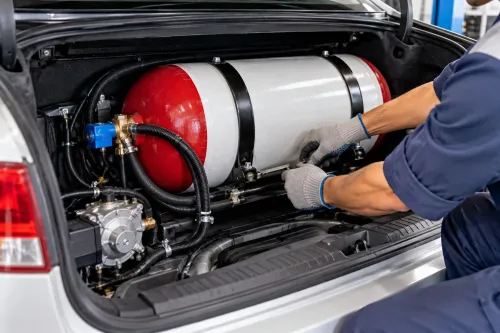
- Inspect cylinder brackets, valve access and clearance from the exhaust, suspension and other moving parts. Check cylinder pressure before blaming calibration.
- After every correction, leak-check the complete fuel path from cylinder valve and filling connection through the high-pressure line, regulator, injector rail and fittings. An ECU scan alone cannot find a gas leak.
Compare the same symptom on both fuels before deciding that the installation is at fault.
| Fuel behaviour | More likely cause | What to check |
|---|---|---|
| Petrol and CNG both misfire or stall | Worn spark plugs, weak ignition coils, clogged air filter, vacuum leak or compression problem | Ignition, intake and compression |
| Petrol is normal; CNG misfires or loses power | Injector imbalance, regulator pressure instability, low cylinder pressure or CNG calibration fault | Filters, pressure, injectors and ECU data |
| Petrol is poor too | Petrol-system fault or failing battery | Petrol pressure, starting voltage and charging |
For cng installation correction pune searches, demand this sequence rather than a blind tune-up. Parts replacement or recalibration comes only after mechanical and electrical causes are documented.
When a Minor Adjustment Is Not Enough for CNG Kit Refitting
A minor adjustment suits a loose clamp, a correctly rated connection needing tightening, or ECU calibration after the mechanical installation passes inspection. Choose complete refitting when the defect affects the pressure path, component compatibility, mounting security, or safety controls; tuning cannot make those defects safe.
- Replace high-pressure tubing with unsafe routing, kinks, abrasion, heat damage, or contact with moving parts. Do not reuse damaged tubing.
- Replace unsuitable hoses, ordinary LPG or pneumatic fittings, unapproved adapters, or incompatible kit parts with approved CNG-rated components.
- Reposition a poorly placed regulator or injector rail, then secure it without stressing hoses or wiring.
- Rebuild damaged cylinder brackets or other mounting hardware when the cylinder has inadequate clearance or can move.
- Treat repeated leaks, bypassed solenoid valves, or missing pressure-relief devices as refitting defects, not adjustment jobs. Preserve every shut-off device.
- Keep tubing away from exhaust heat and suspension or steering movement, and retain access to the cylinder valve, serial markings, and identification labels.
A cylinder is a pressure vessel, not a repairable bracket. Never weld, braze, drill, grind, or heat it; correct the support without damaging the cylinder.
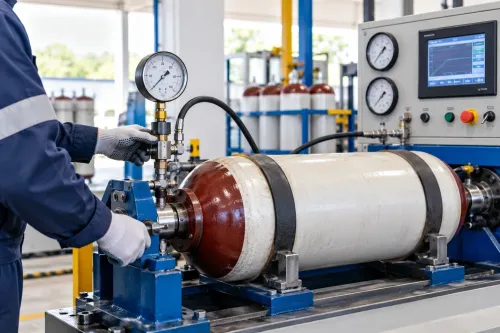
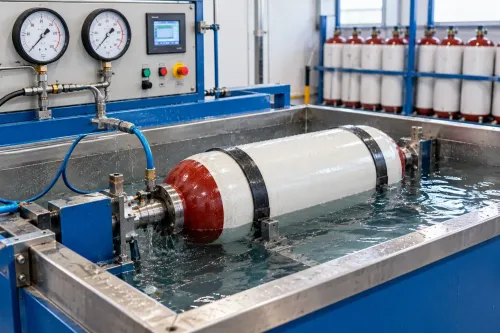
Cylinder removal and approved hydrostatic testing are separate from ordinary cng fitment problem repair. Require that process for corrosion, impact damage, bulging, damaged threads, unauthorized welding, or a failed inspection.
A cng kit refitting in Pimpri Chinchwad job should include a complete fuel-path leak check, followed by gas ECU recalibration only after mechanical defects are fixed.
Documents to Bring and Records to Demand After Correction
Take the RC book, previous fitment or installation certificate, cylinder test certificate, kit warranty papers and earlier repair invoices. Add a written symptom note stating whether the fault appears on petrol, CNG or both, and under what conditions.
- Ask for the kit make, ECU and component identification; cylinder serial number; test date; next due date; installation paperwork; and any updated endorsement or inspection record required for the vehicle.
| Record | Verify | Why it matters |
|---|---|---|
| RC book | Fuel type, kit details and endorsement | Confirms the registration record |
| Cylinder certificate | Serial number, test date and next due date | Shows the cylinder’s testing status |
| Installation paperwork | Approved kit, vehicle application and installer details | Supports warranty, inspection and insurance decisions |
| Warranty and invoices | Parts, dates and previous defects | Prevents a generic “CNG service” history |
Demand an itemized report naming the original defect, parts replaced, mounting and hose-routing checks, complete fuel-path leak-test result, cylinder details, calibration or emissions result where applicable, and installer authorization or job documentation.
Cylinder hydrotesting is separate from ordinary correction. It requires safe depressurization, cylinder removal, examination of the cylinder and valve, approved hydrostatic testing, recorded results and correct reinstallation.
Mechanical correction does not automatically update Maharashtra’s registration record, fuel-type entry or RTO endorsement. Confirm those administrative and inspection requirements with the relevant Maharashtra transport office before treating the job as complete.
How to Compare a Correction Center in Pune
For cng fitment center in pune installation correction, compare the inspection process, not the promised turnaround time. A proper center diagnoses the fault before replacing a regulator, injector rail or gas ECU.
| Choice | Evidence you receive | Risk |
|---|---|---|
| Documented correction | Fault list, component checks, leak-test result and job record | Higher initial effort, clearer accountability |
| Blind tune-up | ECU scan or adjustment without mechanical inspection | Leak or unsafe mounting remains |
| Generic invoice | “CNG service” with no technical findings | Weak evidence for warranty, insurance or RTO review |
Ask these questions before authorising cng installation correction pune:
- Will you diagnose before replacing the regulator, injectors or ECU, and give me a written fault list?
- Will you inspect the cylinder valve, filling connection, high-pressure tubing, joints and shut-off devices before opening or recalibrating the ECU?
- Will you verify cylinder brackets, valve access, hose routing, heat and moving-part clearance, and component compatibility?
- Will you leak-test the complete fuel path after repair, including the regulator, injector rail, hoses and fittings?
- Will you document the original defect, parts replaced, cylinder details, calibration or emissions result where applicable, and installer job details rather than only clear an error code?
The installer must be authorised for the approved kit and vehicle application. Cylinder testing belongs to an approved cylinder test facility, not automatically to every repair center.
For an appointment with Balaji Hydrotesting Lab in Pimpri-Chinchwad, ask which checks, repair records and cylinder-testing documents it handles directly, and which RTO or regulatory steps remain yours.
Choose documented diagnosis and safety verification over the lowest quote or fastest ECU reset.
Related products
 | CNG Kit Installation Balaji Hydrotesting Lab in Pimpri Chinchwad also provides seamless and expert CNG kit installations, transforming vehicles for eco-friendly and... View product → |
 | Cng Kit Service & Repairing Balaji Hydrotesting Lab in Pimpri Chinchwad is a government-authorized CNG Hydrotesting Lab in Pune, doing all types of Cng Kit Services & Repairing... View product → |
Frequently asked questions
What should you do if a CNG vehicle smells of gas or makes a hissing sound?
Stop driving, switch off the engine, keep away from flames and electrical switches, move passengers away, and arrange an inspection without restarting the vehicle.
What should a CNG installation correction inspection check?
The inspection should check the cylinder mounting, brackets, valves, high-pressure lines, hoses, joints, routing, leak points, regulator, wiring, and clearances from heat and moving parts.
When does a CNG kit need refitting instead of a minor adjustment?
Choose refitting when the cylinder or components are poorly mounted, lines are incorrectly routed, parts are incompatible, clearances are unsafe, or repeated leaks remain after adjustment.
Which records should you request after CNG installation correction?
Request the job card, inspection and leak-test results, parts details, invoice, correction date, workshop authorization details, and updated installation or vehicle records where required.
Keywords