“CNG plate renewal” can mean a cylinder revalidation plate, a CNG-kit record update, or a vehicle-registration renewal, and each follows a different date and authority. By separating those obligations, checking the cylinder’s identity, and comparing the full cost with replacement, you can decide whether renewal is worthwhile before paying a centre.
Key takeaways
- Confirm whether you need cylinder revalidation, kit endorsement, or RC renewal.
- Read the cylinder’s stamped test date; do not rely on the vehicle number plate.
- Use hydrotesting for cylinder safety checks, not routine CNG kit faults.
- Choose a recognised centre and compare testing costs with cylinder replacement.
What Does “CNG Plate Renewal” Actually Renew?
“CNG plate renewal” is not the statutory name of one Pune document. Before paying a centre, identify whether the request concerns the cylinder’s periodic revalidation, an endorsement of the CNG kit in the vehicle record, or renewal of the Registration Certificate (RC). It does not normally mean replacing the vehicle’s number plate.
| What may be renewed | Record or component involved | What confirms the correct obligation |
|---|---|---|
| Cylinder revalidation | The pressure vessel and its test record or plate | Cylinder serial number, test result, and matching vehicle details |
| CNG kit endorsement | The vehicle’s RC or transport-office record | Updated RC entry or authorised endorsement for the installed kit |
| Registration renewal | The vehicle’s RC validity | Registration record and expiry date, not the cylinder date |
| Number plate | Physical registration plate | Replacement is needed only for damage, loss, or a legal format change |
A cylinder test is not a PUC emissions test. Hydrotesting examines the pressure vessel; PUC measures exhaust emissions, so one certificate cannot replace the other.
A printed “renewal plate” is not enough if it does not match the cylinder serial number, vehicle registration, and test report. Searching for cng for plate renewal center in pune can show ordinary garages alongside recognised testing facilities, so ask which exact record they will renew and whether the facility issues a serial-number-linked document.
Examine the cylinder’s own markings and the RC before booking.
Find the Renewal Date on the Cylinder, Not the Vehicle
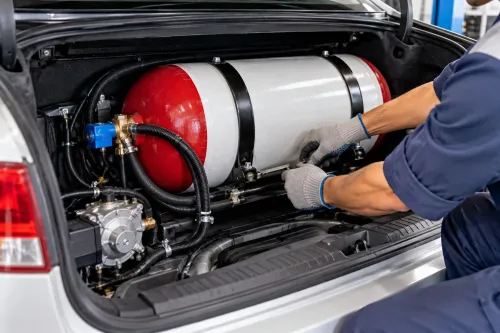
A cylinder’s next examination date comes from the cylinder record, not the vehicle’s purchase date, registration date, or CNG sticker. For a search such as “cng cylinder renewal pune,” start by photographing the permanent stamping on the cylinder before visiting a centre.
1. Locate the stamped or engraved identification panel. Record the manufacturer’s name or mark, cylinder serial number, manufacture date, water capacity, design or test pressure, and every later test date. Dirt, paint, or a worn marking that hides the serial number is a documentation problem, not a reason to guess.
2. Find the latest periodic test date, often shown as a month and year on the cylinder, test plate, stamp, or certificate. Automotive CNG cylinders commonly require examination and hydrostatic testing every three years under India’s Gas Cylinders Rules, counted from the relevant test date.
3. Treat an explicit expiry date as controlling when it appears on the cylinder record or an authorised certificate. If the cylinder has never been tested, the manufacture date starts the history; it does not replace the required periodic examination.
4. Match the certificate to the cylinder’s serial number, manufacturer, and test dates. A certificate with a different serial number, no identifiable testing authority, or an unreadable cylinder identity cannot prove renewal.
Do not confuse this date with RC renewal, insurance, PUC, or vehicle fitness. Hydrotesting addresses the pressure vessel; PUC measures emissions. If no clear last-test or expiry date exists, obtain a written determination before driving or paying for a new plate.
What Hydrotesting Covers—and What Kit Servicing Does Instead
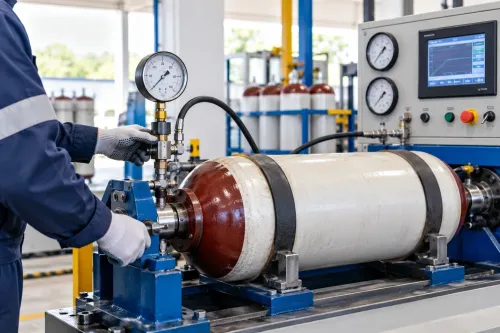
CNG hydrotesting for plate renewal examines the pressure vessel, not the entire fuel system. The cylinder is identified by its serial number, depressurised or removed, visually inspected, pressure-tested, and checked around the valve connection; the result is recorded against that cylinder. A PUC test measures exhaust emissions and does not prove cylinder safety.
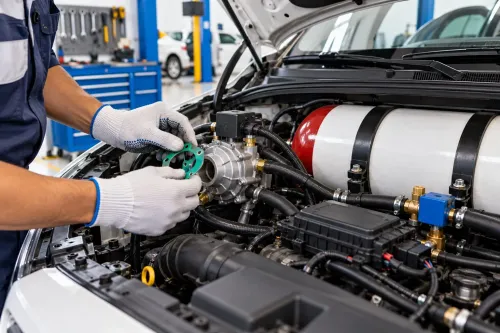
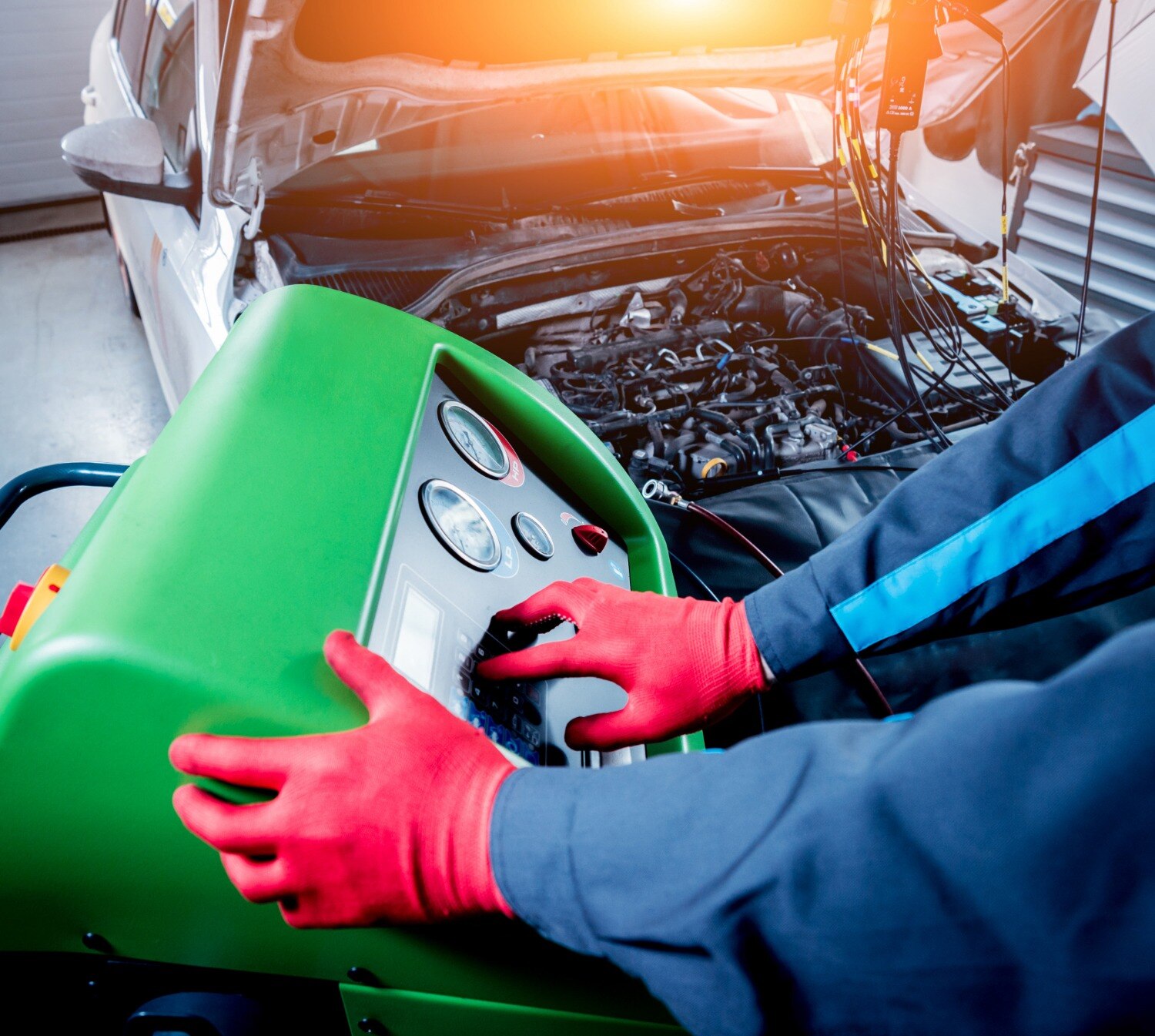
Kit servicing addresses components that hydrotesting does not certify:
- Regulator operation and pressure stability
- Injector-rail performance and leakage
- Shut-off and filling valves
- Filters and filter housings
- High-pressure and low-pressure hoses
- Electronic control unit, wiring, sensors, and calibration
A serviced kit can still contain a cylinder whose examination date has expired. Conversely, a cylinder that passes hydrotesting does not prove that the regulator, injectors, wiring, or hoses are functioning correctly.
After a successful cylinder test, the facility should provide a report linked to the cylinder serial number and record the test date and result. A replacement plate, sticker, or stamp belongs on the cylinder or kit record only when the test has passed and the marking matches the paperwork.
Ask where each marking is authorised to appear.
A workshop invoice for valve replacement or tuning is not a hydrotest certificate. Before accepting the vehicle, check that the report identifies the same cylinder and vehicle, the cylinder is securely mounted, and the high-pressure connections show no leakage.
How to Choose a Recognised Centre and Prepare Your Documents
Choose a centre that can test your cylinder and handle the vehicle record, not merely a garage that repairs CNG parts. Search results for “cng plate renewal center near me” mix these businesses together.
| Centre type | What it can prove | Question to ask |
|---|---|---|
| CNG service garage | Kit servicing, leak checks, regulator or injector work | Are you authorised to test this cylinder? |
| Recognised cylinder-testing facility | Cylinder identity, examination, pressure test and serial-linked report | Which standard and cylinder types does your authorisation cover? |
| Kit and documentation facility | Installation records and vehicle paperwork support | Do you handle the Pune transport-office endorsement for my vehicle? |
Ask to see the authorisation or recognition document, its validity, and its scope. Match that scope to your cylinder’s material, capacity, valve arrangement and vehicle category. A workshop that services an injector rail cannot automatically issue a valid cylinder-test certificate.
Ask whether the final report records the cylinder serial number, test result, date and vehicle registration number. Balaji Hydrotesting Lab is one facility where these questions help you distinguish cylinder testing from ordinary kit servicing.
Confirm the required documents before travelling to Pune’s centre:
- Original registration certificate and a clear copy
- Vehicle owner’s identity and address proof
- Cylinder serial-number photograph and stamped date markings
- Previous hydrotest certificate, plate or report
- CNG kit installation certificate or approval record
- Current insurance and PUC certificate, if the centre requests them
Ask whether removal, refitting, valve seals, photographs and transport-office fees are separate charges. Carry the vehicle for identity matching; a report for the wrong cylinder is useless.
Related products
 | Cng Kit Service & Repairing Balaji Hydrotesting Lab in Pimpri Chinchwad is a government-authorized CNG Hydrotesting Lab in Pune, doing all types of Cng Kit Services & Repairing... View product → |
 | CNG Hydrotesting Balaji Hydrotesting Lab in Pimpri Chinchwad offers precise CNG cylinder hydrotesting services to ensure safety and integrity. View product → |
When Renewal Is Worth the Money—and When Replacement Wins
Renewal is worth the money when the cylinder passes inspection, its identification marks remain readable, and the total revalidation cost is clearly below replacement. Compare the complete bill, not only the test fee.
| Option | What the complete job includes | When it wins |
|---|---|---|
| Renewal | Hydrotest, valve or seal work, kit servicing, documentation, and any approved corrections | The cylinder is sound and parts remain available |
| Cylinder replacement | New compatible cylinder, valve, mounting, installation, testing, and records | The old cylinder fails or repair costs approach replacement |
| Full kit replacement | Cylinder, regulator, injectors, ECU, hoses, wiring, installation, and endorsement | The design is obsolete, altered, or repeatedly unreliable |
Do not renew a cylinder that is badly corroded, dented, fire-damaged, leaking, mechanically damaged, pressure-test failed, or marked with an unreadable serial number. An unavailable replacement valve or missing installation record can also turn renewal into a replacement job.
Before driving, complete this check:
- Confirm the cylinder is firmly mounted and the valve and high-pressure lines show no leakage.
- Check that the kit contains approved parts and has not been improvised or altered.
- Match the cylinder serial number, vehicle registration number, test certificate, and renewal plate or sticker.
- Confirm the testing authority covers that cylinder type and the installer can document the vehicle kit.
- Check the RC, insurance, PUC, and fitness dates separately; cylinder renewal extends none of them.
A printed plate without matching records is not proof of a safe or valid renewal.
Frequently asked questions
What does “CNG plate renewal” mean in Pune?
The phrase can refer to cylinder periodic revalidation, CNG kit endorsement in the vehicle record, or RC renewal. It does not normally mean replacing the vehicle’s number plate.
Where can you find the CNG cylinder renewal date?
Check the stamped or engraved markings on the CNG cylinder for its test or revalidation date. Do not use the vehicle number plate as the cylinder renewal date.
What is the difference between CNG hydrotesting and kit servicing?
Hydrotesting checks the cylinder’s condition and pressure integrity. Kit servicing addresses components such as the regulator, valves, injectors, filter, pipes, wiring, and calibration.
When is replacing a CNG cylinder better than renewing it?
Compare the hydrotesting charge, cylinder age and condition, inspection findings, downtime, and replacement cost. Replacement is the practical choice when the cylinder fails inspection or repair is uneconomical.
Keywords